(N.b. Look at the main page “Supporting Dyslexic Students at Home” for broader information to help parents.)
Schools provide recommendations for education websites to support learning. They use their own choice of intervention programmes and literature to support students with dyslexia during the day and know what would fit best with what your child is exposed to in class.
Therefore, it is always a good idea to ask the SENCo or support teacher at your child’s school for advice on what you could use at home to reinforce what they are doing at school. This is especially true for phonics programmes at primary school. It would not be a good idea to set off on an independent phonic programme at home which is different from that being followed at school.
However, you might find the following resources for slightly older children useful to support your child’s reading, spelling and writing at home, once you have spoken to teachers to determine the areas with which your child is struggling.
1) READING: Reasoning & Reading, Level 1, Joanne Carlisle, Educators Publishing Service, 2000, available online. Most helpful during KS3, when the curriculum may not still be covering some of these skills but your child needs a catch up. This book has photocopiable worksheets on word meanings (classification of words, similes, types of word); sentence meaning, paragraph meaning and reasoning skills. It helps students work our the main point of a sentence, cause and effect, generalisations and relationships between words. These are things that can be confusing for dyslexic students with slow processing or weak short term memory. It helps if they can be taken back to basics of how sentences are formed and the effect on meaning. They can realise it is simpler than hey had feared.
2) SPELLING. The Spell of Words, Elsie. T Rak, Educators Publishing Service, 1979, available online. If you can still get hold of this book, it is helpful for secondary school students who struggle with spelling rules. It is organised by rule, with practice worksheets for each one, so the student can refer directly to the page on the rule they are currently having trouble with, to iron out the issue. Dyslexic students may have missed input of spelling rules first time round. They may need more repetitions when practising than others to secure their knowledge when learning a rule. This book addresses that need. It is very clear and not overwhelming.
Alternatively, Rescuing Spelling, Melvyn Ramadan, Southgate Publishers (date unknown), addresses spelling issues from the perspective of the meaning of words. It explains what prefixes and suffixes and core parts of words mean, and how that helps you spell them. This book is more helpful for older students, especially those who understand a lot about how they are learning.
3) WRITING: Writing Skills, Book A, Diana Hanbury King, Educators Publishing Service, 2003. This book is extremely useful for students who remain confused about how to construct sentences and paragraphs when they have left primary school, even into Key Stage 4. Dyslexic children struggling with phonics may have been focusing so much on how to spell, that they missed input from teachers earlier in education about the building blocks of writing. In the absence of secure knowledge about writing skills, dyslexic students can try to keep sentences simple, to avoid errors, which prevents them expressing their ideas effectively. And they can forget to include the supporting evidence for any statements they make which would help them achieve higher grades. This book, again with easy photocopiable sheets for practice, starts back at the beginning explaining noun, verb, adjective, pronoun and article, then leads into different kinds of sentence depending on their purpose, before explaining the most simple way to start building paragraphs which include more interesting supporting information.
4) PLANNING: Introducing Children to Mindmapping, Eva Hoffman, Learn to Learn, 2010, for younger children. And The MindMap Book, Tony Buzan, BBC Active, 2009. Tony Buzan was the originator of the MindMap concept. Eva Hoffman has published a book making the concept assessable to younger children. MindMapping is a visual way to organise ideas, to plan writing, to plan projects or to secure and build on learning. Tony Buzan offers an online version via www. TonyBuzan.com
Many students with dyslexia or other learning difficulties can struggle to remember what they have heard, read or learned, which makes revising for tests and exams very difficult. The following are some suggestions to make the revision process easier.
1) Make a Realistic, Detailed Revision Timetable
If you break down everything you can learn into chunks and allocate those chunks to time slots in a week by week plan, you have a plan to help you achieve all that is possible. This takes a huge amount of the worry out of approaching exams. You can only do the best you can, only do what is possible. Once a realistic plan is written, all you have to do is follow it, to be doing all that is possible. At least some of the stress will be taken out of looming exams. Set aside a couple of evenings or days at the weekend to build your plan systematically. Here is a guide to help you do this:
Design your own simple template
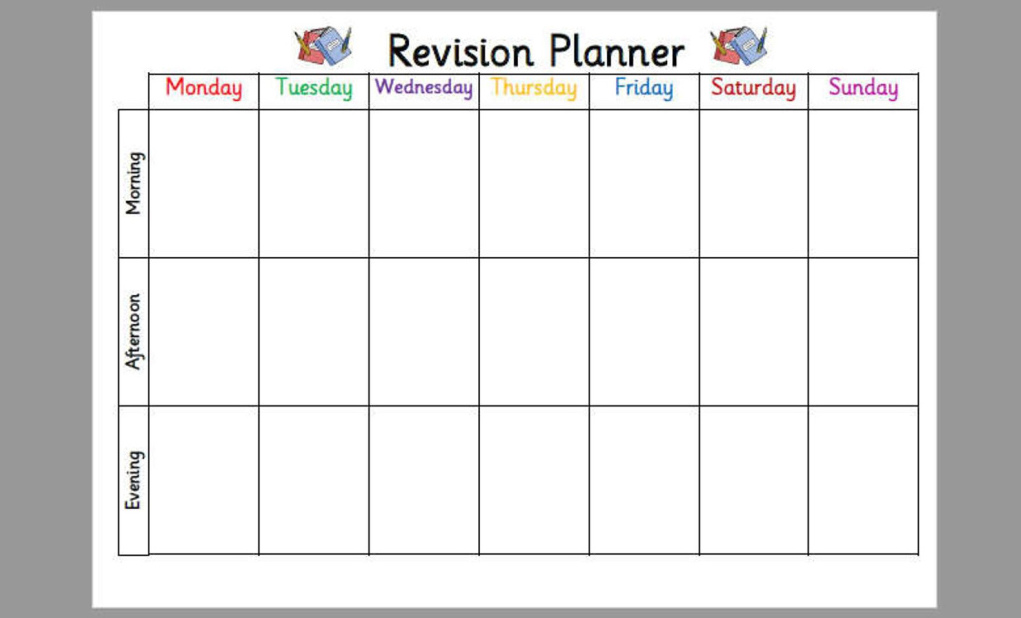
Start with a blank template for each week: morning, early afternoon, late afternoon and evening sessions each day, perhaps. You can use a week per page calendar or diary, or create a Word table with five columns (the first split into days of the week) and eight rows (the first with the headings morning, early afternoon, late afternoon & evening). Or do two or more weeks to a page, if you are neat or are typing. (N.b. Pre-structured online commercial revision guides are very complicated and encourage students to be over ambitious in what they include, and they might therefore not be as effective: you might not be as likely to stick to them.)
First, fill in when you have lessons at school and when you have clubs or sports practice after school and at weekends. Do this for each week’s plan in order, as a first step. Decide how many of your clubs and activities you can continue. Don’t give them all up. You need exercise, fun, variety and rewards. Choose a particular colour pen to mark regular sport or other hobbies. You may want to put diagonal lines across Monday to Friday morning and early afternoon lessons during term time, unless you have study periods free, in which case these times could become revision sessions.
If your sports or clubs sessions are reward enough in terms of recreation to keep you going, that is great, but you may want to add in a reward session or two each week. Maybe you always see your friends Friday evenings. Or maybe you like a long lie in on Saturday mornings. Give rewards their own colour.
Make sure you include part time work shifts where relevant.
Then add a realistic number of revision blocks to each day. Think how many sessions you can realistically commit to. You may decide two days a week before and/ or after dinner you can revise, leaving the other days free for homework and sport for example. You may choose Sunday morning and evening, or Saturday afternoon, It is entirely your plan. If you are too ambitious, you will give up quickly. Circle these time blocks to denote “revision”, so you can easily see where to fill in subject specific details later. (N.b. February just before half term is a good time to start a revision timetable for May/ June exams, in order to fit most of what you need to achieve into the number of sessions you allocate yourself, but you can start earlier. If you start later, you may have to prioritise what there is time for and what there isn’t time for.
Then collect together all your subject by subject revision guides and look at the contents pages to help you break down units of learning into names of topics. Write (different colour for each subject if possible) the unit & specific topic with a page number in each allocated session on your plan, rather than writing “History” or “Biology”. This is how you can work out how to cover everything you need to in the time available. It also means when you come to a revision session and are tired, you don’t need to motivate yourself to decide what to do: that is already done. It is easier to get started that way.
If you are unsure of how much time to give each topic, check how many pages the revision guide takes up on that topic. This may help you to plan how long it will take to revise.
Include at least one session a week on the plan for “catch-up” or “contingency”: to use if you don’t complete a topic in the time allocated or you missed a session for any reason.
Remember, be realistic about how much time you plan to revise. If you know you can only concentrate for 2-3 hours a day, plan a timetable that fits this time limit, or you will get behind.
Start your revision with topics that you are less sure of and may need more time to go over. There may not be time to include all topics, especially if you start your planning at a late stage or cannot manage many hours a day. It is better to do good revision for a limited period each day than pretend to be learning, or passively reading for many hours.
If you do a revision plan for mock exams or year 10/ year 12 exams, make sure you tick off topics you complete and make a note of those you were still unsure of on your plan, so you can prioritise weaker topics and remember which weren’t yet covered for your next revision period.
Or you can include two or more weeks per page and indicate morning/afternoon evening simply by position in each box
2) Revision Techniques
Revision sessions should have several periods of 20 – 30 minute work with a 5 minute break between.
Breaks are important, but should not include texting, social media or playing computer games. New words going into your head will displace those you’ve just been learning and reduce the impact of your revision. Listen to music (without words) or get some fresh air. It is important to take your breaks. A calm mind, and a period when no other new information enters your head after a session, means you keep processing what you revised for longer.
Colour code your revision (using highlighters and Post-its) to make learning more memorable. Use a different colour for each subject’s revision cards or notes, as this gives your memory a helping hand by associating a colour with a topic.
Create (coloured) spider diagrams or Mind-maps for topics you have learned, to keep in a revision box or folder. You can do this straight after a lesson or unit, rather than wait until you start formal revision. For your MindMap or SpiderGram, make brief visual notes about all aspects of the subject you remember, without looking at your class notes. Ask yourself questions to remember all the different aspects you covered. Use arrows to note where things are connected. Then go back to your books or learning site to check what you couldn’t remember initially and add it. This is an active process, which will make you more likely to retain and understand information. Add to your MindMaps, as you learn more.
When using Revision Guides, don’t just read the pages in front of you – interact with them actively. Here are some ways to do this:
Highlight key phrases in the revision guide or worksheet, while saying them out loud.
Put things into your own words in a margin, or at the side of the page, to make them more meaningful to you.
Turn facts into questions on the front of a revision card, and write the answers on the back. Make sure you understand what you are writing. Don’t copy without comprehension. You can turn the card over for answers early on in revision but you will recall answers without turning the card over, when you have done enough work.
Always answer questions at the end of revision guide topics as part of your revision session. Also, leave time in your plan to mark your answers and write revision cards for those you got wrong!
Ask someone else to test you verbally. When you are not reading, your mind might be more actively tuned in to working things out.
Explain what you have learned to someone else, (your mum, dad, sister or brother maybe?) You understand better, what you can make something clear to others.
Make sure you include time on your Revision Timetable to work through Past Papers AND to mark your answers and write up the concepts and facts you were not sure of onto new revision cards. Otherwise, you are not learning from doing the past paper.
When answering questions on past papers, always give full answers. Don’t mentally think you know it and give a partial answer. This could make you lazy when doing the real thing. In many subjects, marks can be lost by sloppiness in not fully answering a question
These are all ways to systematically prepare for exams. Breaking down learning into tangible processes like this, and chunking everything into manageable targets, all of which has been scheduled, takes a huge mental load off and can be a great incentive to get started and keep going.
Turn facts you are learning into questions on the front and answers on the back. Turning it into a question is active learning in itself and stops you cheating when you are trying to recall the information.
Revision cards can be in pre-bound book form,
Creating mind maps can be a useful part of revision activities.
Revision cards can be pocket sized to look over on journeys in a spare fifteen minutes. Treasury tags are a handy way to keep them ordered and together.
3) Create a Revision Box for Revision Resources
Having pieces of paper, some folded, some not, some half under the bed, is not an ideal way to prepare for effective revision. If pieces of paper all look the same, or not important, that is an opportunity lost. We remember what is meaningful to us, what looks interesting or different.
So taking time to create colourful, clear, visual revision notes and resources helps our brains remember them. Also, if you keep everything together, it is much easier to access it quickly, and you are more likely to be motivated to use resources more often. Here are some tips for effective revision resources:
First find or create a box to store all of your different revision materials. Make sure it is deep and attractive.
Create effective revision cards by turning simple facts into questions to write on one side of the card, then writing the answer on the back of the same card, laid out in a visually memorable way. Use different coloured cards or pens for different subjects or topics. This all makes for more active learning and gives you “hooks” to help you recall information. Try using capital letters & different sizes of writing to make key words stand out, too.
Create revision card packs for specific subjects, using a treasury tag or craft ring to keep them together, so you can pop them in a bag or pocket to run through on bus journeys or in short intervals of free time away from home, outside of set revision sessions. This is where you can really secure learning: more repetitions means you retain more of what you learn and remember it more quickly.
When you feel you know a topic well, take that card out of the pack and put it back in the box for later. This way, you are concentrating on areas you are still unsure of in your precious time.
You could try writing key vocabulary for different subjects/ topics, using colour coded Post It notes and sticking them in different rooms to look at when eating/ getting dressed etc.
Any Spider-grams that you create when planning writing or thinking about what you have learned throughout the year could be kept in the box and added to each time you review them. (Or ring-binders could be used with spider-grams organised by subject.)
Keep all marked past papers in the box. Put the questions you got wrong and the correct answers on new revision cards to go over. Time invested in writing these out will be rewarded.
Spider grams you used to plan writing can be stored in your revision file and added too. (Adding colour would make them more effective still.
Critical Thinking is all about learning how to ask yourself the right questions.
Essay writing at A Level and degree level requires ability to analyse ideas and information and organise these mentally according to the specific type of academic argument required for any given assignment. This can be very difficult for dyslexic students. While some students work out how to harness complex thoughts for this process without being taught how to do so explicitly, many dyslexic students benefit from being shown that there is a clear process that can be followed to develop their analytical thinking.
Being aware that there are different ways to develop essays depending on what type of argument is required by each assignment can be very helpful for dyslexic students or students with other SpLDs. As can using checklists of useful steps to follow when researching, planning, organising and checking extended written work. This way of working can be described as using Critical Thinking skills. The tips below summarise some of the ways to use Critical Thinking to make essay writing more manageable.
Using Critical Thinking for Written Assignments
1 In order to “Understand the Question”, refer to all of the following before diving in:
(Other universities also give guidance. These are just examples.)
As part of this stage of preparation:
–Identify the PURPOSE of the writing (i.e. it will not be “to get a good essay mark”, but something like, “to demonstrate understanding of …..”
–Identify the intended READER for your essay – this helps to determine the level of detail and technical language you need to go into. ( e.g. Are you writing for the tutor/ an expert in your subject, or does the question ask you to explain something to a layman?)
2 Next, you need to “Identify the Type of Argument”
(Your “argument” is your written assertion/ claim/ statement of opinion together with the evidence you have found in support of your point of view).
Choose from frequent types of argument the question might ask for:
– Schematic Argument: have you been asked to break down a concept or idea, in order to simplify/explain it?
– Experimental Argument: have you been asked to argue “What would Happen If …”?
– Problem Solving Argument: have you been asked to identify a problem & a solution to that problem, then to explain how you would implement & evaluate the solution?
– Comparison Argument: have you been asked to describe advantages/disadvantages or similarities/differences between two concepts?
– Prioritisation Argument: have you been asked to choose which element of a solution is most important/ most effective?
– Cause & Effect Argument: have you been asked to state the cause and effect of an event/ action/ process?
– Developmental Argument: is your task to outline the development stages of a process/ state of being?
– Synthesis Argument: have you been tasked with combining two or more arguments or concepts to make something new?
– Combative Argument: is the assignment to deconstruct an argument logically, according to evidence available to you?
– Moral/ Ethical Argument: is this a case of identifying what is right or wrong?
– Philosophical Argument: Is the task to explore the fundamentals of a belief/ approach
– Applying Standards Argument: have you been asked to use guidelines / standards to critique a process/ topic
3 Choose the appropriate Essay Structure for your type of argument – there are recognised essay plan structures for each different type of argument.
By familiarising yourself with the nature of your type of argument, you have made planning your essay easier. It is not always a case of need for creating a structure from scratch each time. Following a recognised template structure can be very effective.
Map your argument visually (e.g. using Mind Map), using the Typical Structure for that type of argument.
Stella Cottrell’s Critical Thinking Skills book (MacMillan Education) outlines how you can map different types of argument to different types of essay structure.
4 Once you have an idea of what structure you will follow, start collecting evidence for your research phase.
Collect, Read, Analyse & Record Evidence from Source Materials
–Use a template Source Material Analysis Sheet to take notes of information you learn when researching, to make it easier to include references and specific quotes when writing finished pieces.
A source material template could be a copied A 4 sheet on which you include reference to and space to record: title of publication; author; date of publication; publisher; summary of author’s argument; relevance of source to essay; page numbers of useful quotes)
–Use self questioning to get the most out of source texts. For example, actively ask yourself:
I) Where you have heard similar ideas before? How might this be linked to what you know already?
II) How might a specific fact, reference or opinion be important for your essay?
III) How credible is an assertion/claim being made by the author?
IV) How exactly can what you are reading be applied to the subject you are exploring?
Critical Thinking is primarily learning to constantly ask open questions to understand concepts, to develop new ideas and to produce rigorous, logical arguments.)
Always take considerable time looking at how points of view and evidence in source material might support your argument, rather than just reading without specific focus.
5 Overcome Belief Preservation when Reading Sources
This means, make sure you are not interpreting what you read in a way which is coloured by what you already think. Keep an open mind.
For a thorough academic argument, you need to make sure you:
– Don’t just look for evidence for your existing belief
– Don’t avoid/ dismiss evidence which contradicts your belief. Look closely at it
– Rate evidence equally, whether it supports or contradicts your belief
– Change your belief if necessary!
Overcoming a natural instinct to look for evidence for what you already believe is an essential part of Critical Thinking theory.
6 When you have done your research, you can start a detailed plan
Plan out your points, within your chosen Argument Structure, using your source evidence. Here are some ideas you could use:
– A2 paper & stick post its on it with points from different sources. You can then move them around.
– Or use a whiteboard, use arrows to change organisation as you develop thinking. Take a photo of the plan, especially if you make several attempts and rub them off each time.
– Or use an online planning tool.
Put source references on the plan now! It is much easier than trying to do it later!
Make sure you are following an appropriate structure for the type of argument being developed when working on paper or whiteboard (or with an online planning tool.)
Keep referring to the question as you plan, using self questioning:
– Am I focused on the main issue?
– How is this evidence relevant? Have I recorded it in the right place on the plan?
– Am I forgetting a viewpoint I should consider? What else is there to think about?
– Is this the right level of detail? Do I need more? Less? Whom am I writing for?
– What facts from sources/ my knowledge, help me answer the question? Have I included all the useful bits I found? Have I included bits that weren’t as useful as I thought?
– Have I got diverted from the main task? If so, what needs to come out?
7 Finally, when you have collected all your data, arranged in an appropriate structure, you can plan out each individual paragraph:
– Make your Point
– Give your Explanation of the point
– Provide the Evidence for what you are saying
– Make an Evaluation of how secure your evidence and assertion is
– Always include references to source material and quotes as you go along (at least page number and name so you can easily go back for all information for references). This is much easier and less time consuming (really!) than going through it all again.
8 Then you are ready to Check and proofread. This is the Evaluate stage of your essay:
– Check each part of the argument against the original question
– Check themes/ evidence are grouped effectively
– Ask someone else to read/ check it – Take their feedback into account, but don’t make changes without checking their comments are valid. Different people will have different types of feedback which is useful.
– Take time when checking, to consider how points of view and evidence in source material support your argument: Have you got the right balance? Should you add something? Should you reduce the emphasis of a particular source which may not be in line with the key messages required in the question?
Summary
The information above is a very useful checklist of steps to go through when approaching a daunting extended academic essay. Don’t forget to ask for help from as many valid sources as possible. Don’t make any assumptions early on, which could damage the effectiveness of all your work. Leave yourself enough time. Be prepared to do multiple versions, and to take time, with breaks in between. This is a lengthy process that cannot be done in a couple of days.
British Dyslexia Association is running a free webinar this week for parents to expand knowledge on why focus on arts, in which many dyslexic students may excel or be interested, is critical to helping them thrive in other areas of their lives too.
This is a useful list of resources for a wide variety of SpLDs often co-occurring with dyslexia, aimed at parents as well as schools, and the resources are free to use. The list was published in March 2020 and the information was updated in April 2020.
These are phonics resources and activities in line with the UK curriculum. They can help parents when home schooling and are dyslexia friendly. There are opportunities to learn in a multi-sensory way and to use repetition to embed learning. And they are fund: the best way to make learning secure.
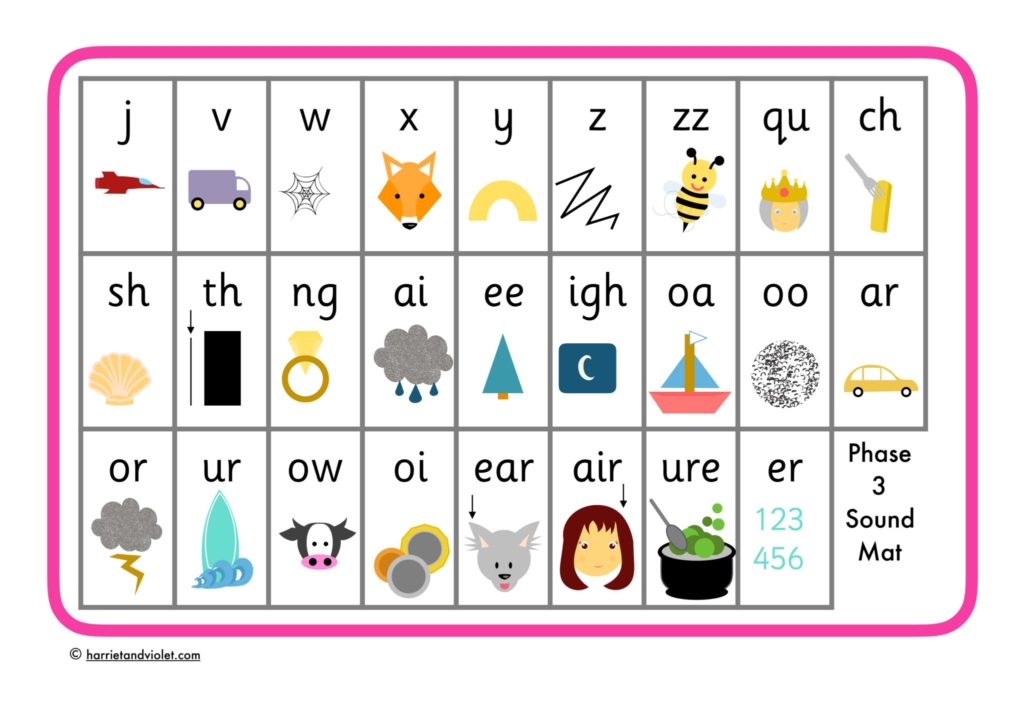
Phonics is the system of mapping letters onto sounds to read and vice versa to spell. Children learn “Letter-Sound Links” in early education – the relationships between letters and sounds, in order to be able to read and spell. Phonics shows learners what sounds individual letters make in different circumstances, when combined with other letters, for example.
Dyslexic children can find it difficult to identify and differentiate between sounds. They can confuse some of the sounds they hear. Mispronounce them. Jumble sounds in some words. This is clearly going to make it harder to acquire phonics.
Children can learn to read words by sight, recalling what each word looks like, in order to identify it. They can learn to remember the visual shape of words and to visually recognise patterns of letters when spelling. But it would be impossible to know all of the individual words you would need when you are reading and spelling at an advanced level. That would be too many words. That is where phonics comes in. Understanding the rules for how letters and combinations of letters translate into sounds, is what enables good readers to read fluently and to read words they have never seen before. Children with secure phonic skills can recognise patterns quickly and can automatically move from what they hear to what they see or write.
Why can dyslexic children struggle with phonics?
Dyslexia usually involves weaknesses in the type of processing required to manipulate sounds in words. That is an underlying weakness in exactly the skills being learned.
But dyslexia can also involve slow processing of sound information, which means that if teachers cover new concepts very quickly, they may miss bits. And when there are gaps in knowledge, that will clearly cause problems. And dyslexia can also involve difficulty remembering sound information, so if teachers move swiftly on from teaching one letter-sound link to another, a dyslexic student may not have practised it enough, to have secured that knowledge in their long term memory.
Can dyslexic children learn phonic skills?
Just because dyslexic children may find it more difficult than others to learn phonics, does not mean they cannot do it. They may need longer to learn. They may need to learn in a different way.
Multi-sensory teaching and learning, often offered by specialist dyslexia teachers, can include seeing, doing or touching at the same time as saying or hearing. Learning something in more than one way at the same time is the same as multiple repetitions. It is like doing it more than once. It can even be better than that, as using visual ways to learn, or incorporating touch or music even, is more interesting or fun, which makes information memorable and likely to stick (see page on Memory Strategies)
There are also several simple activities you can do at home to make it easier for young dyslexic children to be responsive to phonic learning at school, despite any underlying processing weaknesses which could otherwise mean that they could struggle more. These can be described as Pre-Literacy Skills.
Pre-Literacy Skills
1) RHYME Rhyme is one of the most basic pre-literacy skills. Recognising rhyming words makes reading much more efficient. So re-learning nursery rhymes and teaching them to your child will help them when they start to read. If they want to make up their own, however silly, and even with pretend words, that is also useful.
2) LETTER SOUND LINKS Another basic phonic skill is knowing what sound each letter of the alphabet makes. Parents can help teach this with wooden or plastic letters set out in an arc in the alphabet sequence, and talking to their child about the “names” of the letters and the basic “sounds” they make.
Knowing what sounds words begin with is also an essential skill. Therefore word games at home which focus on initial letters, such as “I Spy” set your child up better for learning literacy skills.
3) ALPHABET SONG Reciting the alphabet in order, as the well known “song” will also help your child. Sequencing can be difficult for those with dyslexia and knowing where letters come in the alphabet, will play a part in making literacy skills easier for them. So playing an alphabet game can be very useful at the same time as enjoyable: trying to think of animals or foods with each letter of the alphabet in turn for example.
4) MEMORY STRATEGIES Learning memory strategies, even when very young, will help your child retain phonics input they are taught at school. There are lots of memory games for small children, and they encourage children to work out their own ways to remember things. Kims game is always fun (putting six to a dozen different items on a tray, giving the children a minute to look at them and try it remember them, then putting a tea towel over the tray and seeing how many items there can recite. You can repeat to see how many more they remember the second time. They will eventually learn strategies, such as saying to themselves “You use this in the bathroom” or “small and blue” or “begins with “k”. “. Another game is: I went to the market and I bought …..”: children remember the list of items already bought by the players before them and add an item each time.
5) FAMILIARITY WITH BOOKS Reading time with parents, to allow children to develop favourite picture books, is an opportunity for children to deliver other pre-reading skills: Which way up do books go? Which direction do you read in? What is a title? They don’t have to be able to read any words to learn reading skills this way.
And when your child does start to read…….
When your child is ready to start learning to read, and is on a reading scheme at school, but you would like to help them at home, there are phonics based reading books designed for dyslexic children that you may find useful and fun to share with your child. This is one example of a website offering such books:
This is a great resource by a music company celebrating what Neurodiverse employees (whether they have dyslexia, ASD orADHD or a combination) bring to teams and organisations,which would all be the poorer without them.


















 Dyslexia Support and Assessment in Hampshire